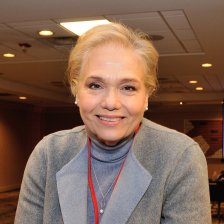
The Successful Family Foundation Board Chair: Leading with Passion and Purpose is the result of more than 60 interviewees that I conducted with family foundation board chairs and CEOs. The conversations highlighted qualities and practices that support effective and successful board leadership in family foundations.
Frequently, over years of working with family foundations, I’ve had to address two unfortunate stereotypes about board chairs. The first would have you believe that strong foundation board chairs lead with a controlling, dominant presence. More than once, I’ve heard the joke that the chair introduces proposed actions by saying, “all those in favor of my proposal, say ‘aye.’ Those opposed, say ‘I resign.’”
In fact, most family foundations are founded by an entrepreneur who may very well have become successful, at least in part, because of a single-minded attitude and approach to people and business. Further, the “command and control” entrepreneur is often the first, and frequently long-serving, foundation board chair. To that extent, the stereotype may be understandable. However, if the goal is that the foundation is to move beyond an individual endeavor to one where family members and others participate fully, a more shared approach to decision-making is required.
The board chair title as more honorific than a critical role requiring certain personal qualities, experiences, and habits is another stereotype. Foundations who regard the chair role as such may place a higher value on fairness or inclusion, giving everyone a turn, than on choosing only those with the capability, capacity, and commitment to doing the job well. Of course, they don’t have to be mutually exclusive.
The recently released study of board chair leadership reveals that board chairs take great exception to both misperceptions. An effective family foundation chair is neither domineering nor merely a figurehead, but rather someone who exhibits what I call facilitative leadership. My conversations with board chairs illuminated a specific set of personal qualities, experiences, and habits that, when brought to the chair role, lead to greater satisfaction for all involved. In fact, more than 80 percent of interviewees report that their board and foundation is best served by those characteristics and the facilitative leadership style they embody.
Why Facilitative Leadership?
The facilitative board chair understands the limitations of an iron fist approach, especially in a foundation with multiple generations of family members involved. Family foundations—and their board chair leaders—respect that the work must be done well but they also respect the intangibles: family legacy and history, shared values, a range of personalities, and the emotional, complex relationships that characterize even the healthiest of families.
Facilitative board chairs fully understand the roles and responsibilities of the job. They embrace the thoughtful participation of others. The facilitative chair seeks to engender power and accountability in board members, staff members, and partners. They invite the opinions of others and encourage diverse (and even contrary) opinions in the firm belief that respectful candor and deliberation yield the best outcomes. Consequently, such board chairs are great listeners and are willing to be wrong or, at least, persuadable.
Facilitative board chairs value building and sustaining good relationships as critical to good process and outcomes. But, while relationships are top of mind, they don’t detract from good process. The facilitative board chair is purposeful. They don’t let deliberations get out of hand and they don’t fear stepping in when necessary.
The Personal Qualities of Facilitative Board Leaders
By far, interviewees most frequently mentioned empathy as a quality of facilitative board chairs. Empathy is the special ability to see things from the perspectives of others. Beyond just a genuine openness to other’s opinions and experiences, facilitative chairs have the gift of bringing both heart and head to key decisions and relationships.
While the outward-looking quality of empathy received the most attention, chairs contended that the facilitative chair also has a strong sense of self. Modeling both empathy and a healthy ego results in a servant leadership approach to board leadership. In my experience, servant leadership is the best possible approach to being an effective chair—something that the chairs I spoke with overwhelmingly affirmed. Other qualities of facilitative chairs include diplomacy, mediation, and negotiation—qualities closely tied to servant leadership.
While most chairs recognize that some individuals are more predisposed to these qualities than others, they also firmly believe that techniques and habits can be learned and practiced. In fact, several chairs told me that they weren’t (as one chair stated) “hard wired to behave in an open and facilitative way.” Several chairs noted that they made deliberate efforts to implement facilitative practices. With practice, and seeing the great results of facilitative leadership, chairs report it became easier and more second nature.
The Practices of Facilitative Board Leaders
Facilitative leadership is not just the result of personal qualities or experiences. It’s a byproduct of developing habits and practices that ensure facilitation is brought to bear on board deliberations and relationships.
Facilitative chairs involve others in meaningful ways. The strategic use of committees can add depth to decision-making by increasing the board’s access to research and deliberation. Committee chairs and/or a vice chair role can add to the board’s bench strength and create a pipeline of future capable chairs. In sharing authority and influence, the facilitative board chair demonstrates (and relies on) the value of shared accountability.
Managing all that participation requires that facilitative board chairs have to be great communicators. Communication must be more than a welcoming personal style. It means establishing (and committing to) a schedule of opportunities for being in touch with the board, family, staff, and others. At the same time, such board chairs respect boundaries. Chairs ensure that committee chairs are well aware of the scope—and limits—of their authority. And, key to maintaining appropriate boundaries, the CEO doesn’t fear any inappropriate overstepping in staff management by the chair or other board members.
Finally, two practices most often mentioned were making the time needed to do the job well and maintaining the willingness and ability to manage conflict appropriately. Unsurprisingly, no participant said the role took less time than expected. Quite the contrary, most chairs made significant accommodations in their own schedules, including their own professional and personal demands, to fulfill all the obligations of the position in a timely and responsive way.
A chair’s ability (or inability) to manage conflict may well be the most important indicator of a successful chair. Conflict is to be expected in dynamic, evolving organizations where different personalities with emotional ties gather. Chairs who understand that conflict is to be managed rather than feared—and who find ways to name the conflict, address it, and move forward—tend to be more successful leaders.
Facilitative Leadership in Action: Navigating Legacy Grants
In my work with hundreds of families, I’ve seen the ways that facilitative leadership can help move boards through times of conflict, support smart decision-making, and foster meaningful engagement across generations. For example, one family foundation faced significant change as a new generation came onto the board. The older generation had worked with the late founder and was fiercely protective of his legacy. They had always readily approved large grants to legacy organizations (many of which carried the name of the founder) that the founder had supported.
The next generation questioned the legacy grants and the related programming that had become stale. They believed that legacy grantees, while receiving special consideration due to history, should be held accountable for performance and fundraising. In contrast, senior board members believed this was disrespectful of their relationship and history.
The chair of the board recognized that the intergenerational tension was larger than disagreements about legacy grants. It touched on governance, grantee relationships and communications, program effectiveness, decision-making, and more. She determined that an outside facilitator would be necessary, and led the board in setting goals for the process of engaging a facilitator and articulating what would make their decision not only acceptable but enthusiastically supported.
By knowing when to bring in outside help, ensuring everyone was heard, and keeping discussions focused and objective, the chair led a process that resulted in grants everyone supported while strengthening their partnerships with legacy grantees, and building trust and good will among board members. The chair’s openness, ability to listen, respect for multiple points of view, and skills in mitigating conflict set the foundation up for a strong future at a point when tensions had the possibility of leading to long-term conflict.
Closing
Some may associate qualities like empathy and a talent for building and sustaining relationships with a soft, even ineffective, leadership style. The chairs interviewed for this study firmly believe that facilitative leadership is anything but soft. Rather, it’s an effective and meaningful way to lead. Further, several chairs admitted to once thinking facilitative practices took too much time. With experience, they now recognize that an investment in facilitative leadership not only saves time in the long run but also supports better outcomes that have greater buy-in across the organization.
Participants also recognized the role of the chair as purposeful. They encouraged adopting a job description for the board chair so all candidates understand exactly what the job demands.
The extraordinary insights shared by interviewees likely will inform their own practice and the practices of their colleague chairs. Moreover, the findings will help family foundations identify both caring and capable candidates for excellent board and foundation leadership in the future.