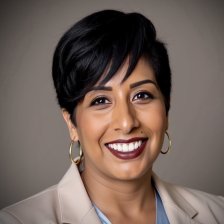
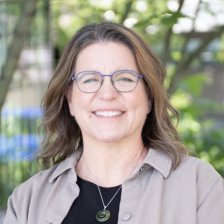
In 2021, Kathleen Simpson, CEO of The Russell Family Foundation (TRFF), launched an open application for community members who wished to serve on TRFF’s investment committee. The foundation was looking for new voices with financial expertise. This was wildly successful because the process brought forward candidates beyond the foundation’s existing networks and resulted in the addition of community members whose expertise and perspectives strengthened the committee’s work. In 2024, the foundation took the idea a step further, launching its first open call for community board members. Evlyn Andrade and Rashad Morris were selected to join a nine-member board that includes six family members. While the foundation had welcomed community board members before, this marked the first time TRFF used an open application process to find them. At TRFF, community board members hold equal voting rights and full governance standing. Here, Board Chair Sarah Cavanaugh and community board member Evlyn Andrade reflect on the process and what has changed since.
Most family foundations who invite nonfamily members to the board are inviting community members that they already know and trust. What was TRFF’s impetus for launching an open application process?
Sarah Cavanaugh: I understand some family foundation boards are hesitant to bring on community members, but we have long valued community voices on the board. When the board committed to being more inclusive of people with life experiences different from our own, the next honest step was to try an open call for new community members. Rather than relying on warm referrals from people already in our network, we asked: who is out there that we don’t already know? Who would come forward if we simply opened the door? I was genuinely curious who would apply, and I had no fear about it.
What did the application process entail?
Evlyn Andrade: I had no prior connection to The Russell Family Foundation when I applied. I learned about the opportunity after a friend posted it on the Environmental Professionals of Color (EPOC) Seattle listserv. What struck me from the start was how intentional the process was. The foundation posted an open call publicly, inviting anyone with relevant lived experience and a commitment to the mission to apply. Every candidate was offered an initial 30-minute call with the foundation’s senior program officer to learn more about their interests and get their questions answered. Those who advanced participated in a 60- to 90-minute interview with the selection committee made of four board members and the CEO. Final candidates then interviewed with the full board.
What made it feel genuinely equitable was the transparency in the process. Candidates received the interview questions in advance and the bios of everyone who would be in the room. That is not standard practice. It signaled that the foundation was as invested in the candidates understanding them, as they were in understanding the candidates.
What has changed since Evlyn and Rashad joined the board? What has been the biggest benefit?
SC: The board got younger, and that matters. Evlyn and Rashad brought new energy and new questions about how we do things at the foundation. Questions such as: You have been doing this [fill in the blank] for twenty-eight years, what if you considered this other way instead? That kind of question, asked with curiosity rather than criticism, has opened our thinking about what is possible. Also, there is always value in bringing in someone who has had to raise money for nonprofits—someone not yet conditioned by how philanthropy has traditionally been done. Someone who understands what fundraising and the grant process feels like from a nonprofit’s perspective.
What has been your most meaningful experience since joining the board?
EA: Honestly, how humanizing it has been. I came in carrying the weight that many community board members carry: the pressure to represent your community well, the awareness of being one of the few, the emotional labor of navigating rooms where the culture and financial power belong to someone else. That weight is real and it does not disappear.
But sitting across from people whose family navigates grief, mental health challenges, and loss, and seeing that wealth does not protect you from any of it, changed something in me. That recognition was possible because family members were willing to be vulnerable themselves. They did not leave their humanity outside the boardroom or ask me to leave mine there. Their willingness to be candid about grief and difficulty created space for a more honest relationship. The difference between their lives and the lives of the communities this foundation serves is not a difference of values or character. Circumstances are different. Financial ease is different. The human experience underneath those circumstances, the thing money cannot touch, that they share. That recognition closes a gap that philanthropy rarely acknowledges: the gap between giver and receiver, between the room where decisions are made and the communities those decisions affect.
What is your advice for other funders who are considering or have recently onboarded community board members?
SC: Be curious, not judgmental. (Thank you, Ted Lasso.) Take the time to get to know one another. Build mutual respect before you need it. And ask your existing board directly: is anyone afraid of this? What is that fear about? Name it. Because I think the fear for many foundations is not really about the new voices. It is about change itself. There are some foundations that have a scarcity mindset, a belief that if something changes, something will be lost. What we have found is the opposite. Your board is not losing. You are gaining a perspective you cannot manufacture any other way. Ask each other: What are you protecting, and who does that protection actually serve?
What is your biggest learning since joining the board?
EA: That the fear is on both sides of the table. Funders worry about what changes when new voices enter the room. What does not get said is that community members carry their own fear into those rooms too. Whether my voice will land. Whether something someone says to me across the table will sting in a way that I must absorb quietly and process later. Mutual respect is not a nice-to-have. It is the condition under which this works at all.
If I could tell foundations one thing before they bring on community board members, it is this: prepare your existing board as you recruit new members. The work of building a room where everyone can show up fully is shared.
What is your call to action for other family philanthropies?
SC and EA: Add community board members to your boards. Not as a gesture, but as a structural commitment to making better decisions. Run an open call. Be transparent about the process. Get to know the people who apply, not just the ones who are referred.
Give community board members full governance rights: the same voting power, the same standing, the same seat at the table as any family member. Compensate them for their service. Showing up authentically in rooms that were not built for them is real work. Treat it that way.
But opening the boardroom door is only the beginning. The deeper work is creating a board where people who arrive through different doors have the same authority once they are inside. That requires work for everyone. Family members must be willing to examine traditions and assumptions that may have gone unquestioned for years. Community members must be willing to enter a space with its own history, relationships, and ways of operating and bring their experiences fully into it. And the foundation itself must create conditions for both to happen.
Sharing governance power does not mean diminishing the role of family in family philanthropy. Nor does adding community voices automatically shift power. The opportunity is to build something stronger together; a board where different forms of experience and knowledge can shape decisions and deepen the foundation’s understanding of the communities it hopes to serve.
We are writing this at a moment when institutions may feel an instinct to turn inward. The political environment is volatile, and the instinct to protect what you have built is understandable. But this is precisely the wrong moment to insulate. The money held in foundations and donor-advised funds across this country has enormous potential to support meaningful change. We can meet this moment of overwhelming need by reaching beyond familiar networks toward people with different lived experiences. Now is the time to reach out to your grantees, your community, and invite their voices and experience into the boardroom.
This is our invitation.
The views and opinions expressed in individual blog posts are those of the author(s) and do not necessarily reflect the official policy or position of the National Center for Family Philanthropy.